
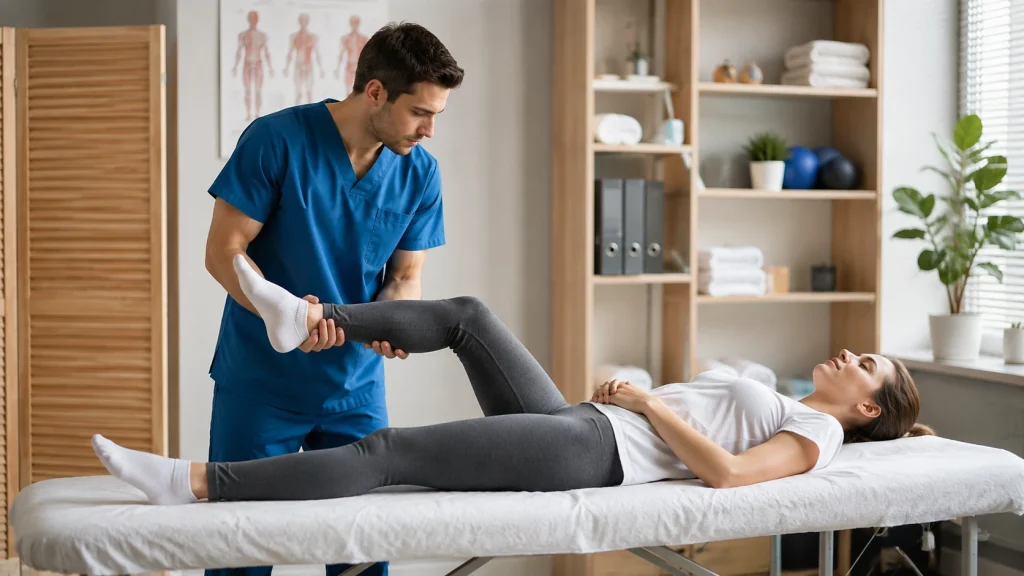
Manual therapy is a hands-on approach used by physiotherapists to assess and treat movement and musculoskeletal problems. It may be used alongside exercise, education, and other rehabilitation techniques to help manage pain, improve movement, and support a return to normal function.
Manual therapy is not a standalone solution for every condition. Its role depends on the individual’s symptoms, assessment findings, treatment goals, and overall rehabilitation plan.
What Is Manual Therapy?
Manual therapy involves specific hands-on techniques applied to muscles, joints, and other soft tissues. Depending on the condition and clinical assessment, a physiotherapist may use techniques such as:
- Joint mobilisation
- Soft-tissue techniques
- Muscle and fascial techniques
- Stretching and assisted movement
- Other clinically appropriate hands-on techniques
The specific technique used should be selected according to the individual’s presentation rather than applied as a routine treatment.
What Are the Benefits of Manual Therapy?
1. May Help Reduce Pain
Appropriately selected manual therapy techniques may help reduce musculoskeletal pain and make movement more comfortable.
This can be particularly useful when pain is limiting your ability to move or participate in rehabilitation exercises.
2. Can Improve Joint Movement
Joint stiffness can affect how you perform everyday activities and exercise. Manual therapy may be used to help improve joint mobility when restricted movement is identified during assessment.
3. Can Improve Soft-Tissue Mobility
Hands-on techniques may be used to address areas of muscle or soft-tissue restriction that are contributing to discomfort or limited movement.
4. Can Help You Move More Comfortably
When pain or stiffness makes movement difficult, manual therapy may help create a more comfortable window for movement and exercise.
This can allow you to participate more effectively in an active rehabilitation programme.
5. Can Complement Exercise-Based Rehabilitation
One of the most important roles of manual therapy is how it can work alongside active rehabilitation.
For example, a physiotherapist may use hands-on treatment to temporarily improve comfort or mobility and then use exercises to help build strength, control, and functional capacity.
Manual Therapy Is Not Just Massage
Although some manual therapy techniques involve working with muscles and soft tissues, physiotherapy-based manual therapy is broader than massage.
Treatment is selected based on a clinical assessment of your:
- Pain
- Joint mobility
- Muscle function
- Movement patterns
- Strength
- Functional limitations
- Rehabilitation goals
The objective is to use hands-on treatment where it is appropriate within a wider rehabilitation strategy.
Is Manual Therapy Suitable for Everyone?
Not necessarily. Manual therapy may not be appropriate for every condition or every stage of recovery.
A physiotherapist should first assess your symptoms and determine whether hands-on treatment is suitable. In some cases, exercise, education, activity modification, or other approaches may be more appropriate.
When Can Manual Therapy Be Useful?
Manual therapy may be considered as part of rehabilitation for certain musculoskeletal problems, including:
- Neck and back pain
- Shoulder stiffness
- Joint mobility restrictions
- Sports-related injuries
- Muscle and soft-tissue problems
- Movement-related pain
The appropriate treatment depends on the individual’s specific condition and assessment findings.
Combining Manual Therapy With Active Rehabilitation
Long-term recovery often involves more than reducing symptoms temporarily. Building strength, improving movement control, restoring mobility, and gradually returning to normal activities are important parts of rehabilitation.
At DrNGR Physioclinic, manual therapy may be incorporated into a personalised treatment programme when clinically appropriate, alongside targeted exercises, movement rehabilitation, and patient education.
Takeaway
The benefits of manual therapy can include improved comfort, mobility, and movement when it is appropriately selected for the individual’s condition. However, hands-on treatment is most effective when it forms part of a broader rehabilitation strategy rather than being relied upon alone.
At DrNGR Physioclinic, treatment begins with understanding your condition and functional needs, allowing manual therapy and other rehabilitation techniques to be selected according to your individual goals and progress.