


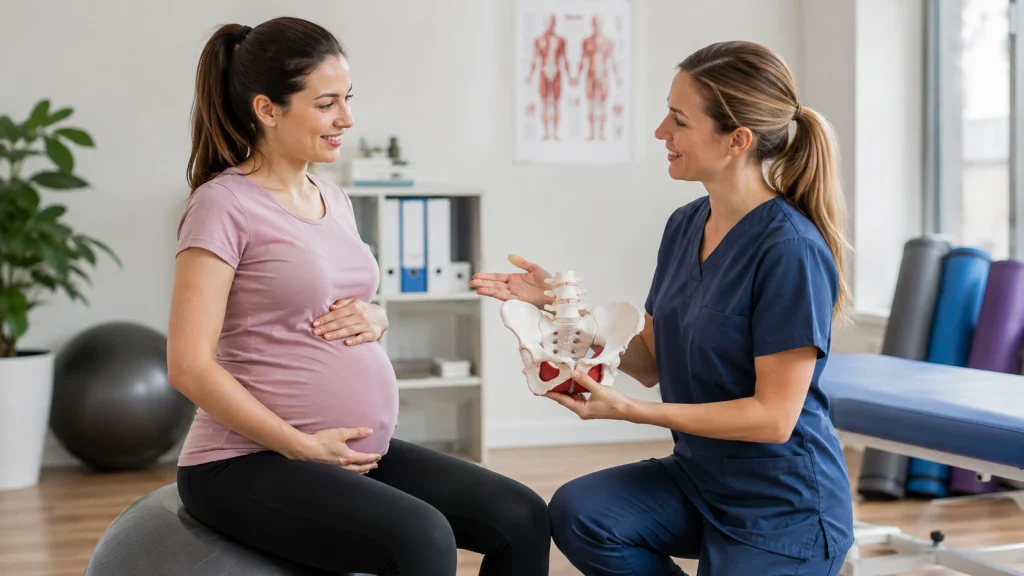
Pregnancy brings significant physical and hormonal changes as the body adapts to support a growing baby. These changes can affect posture, balance, muscle function, and the way you move, sometimes leading to discomfort in the back, pelvis, hips, or other areas.
Pregnancy physiotherapy can help you manage these changes safely, maintain physical function, and prepare your body for the demands of pregnancy, childbirth, and recovery.
How Does Pregnancy Affect the Body?
As pregnancy progresses, changes in body weight, posture, joint mobility, and muscle function can place additional demands on the musculoskeletal system.
Common physical changes may include:
- Increased lower back discomfort
- Pelvic or hip discomfort
- Changes in posture and balance
- Reduced core and pelvic floor control
- Muscle tightness or weakness
- Difficulty maintaining comfortable sleeping positions
- Reduced tolerance for certain daily activities
Not everyone experiences the same symptoms, and the appropriate approach depends on your stage of pregnancy, symptoms, activity level, and individual needs.
How Can Physiotherapy Help During Pregnancy?
A physiotherapist can assess your movement, strength, mobility, and functional limitations and develop an appropriate programme based on your individual needs.
Pregnancy physiotherapy may help with:
Managing Back and Pelvic Discomfort
Individualised exercises and movement strategies can help improve mobility and support the muscles involved in maintaining comfortable movement.
Maintaining Strength and Mobility
Appropriate strengthening and mobility exercises can help you remain physically active and better manage the changing demands placed on your body.
Improving Posture and Movement
As your body changes, your usual movement patterns may also change. Physiotherapy can help you understand these changes and develop more comfortable movement strategies.
Supporting Pelvic Floor Function
Pelvic floor rehabilitation may be incorporated when appropriate, helping women understand and manage pelvic floor function during pregnancy and after childbirth.
Preparing for Childbirth
A physiotherapist can provide guidance on positioning, movement, breathing, and physical preparation where appropriate and within the individual’s medical considerations.
Is Physiotherapy Safe During Pregnancy?
Physiotherapy during pregnancy should be individualised according to your stage of pregnancy, symptoms, medical history, and obstetric guidance.
A qualified physiotherapist can modify exercises and treatment techniques to suit your changing needs. If you have pregnancy-related complications or have been advised to restrict physical activity, discuss physiotherapy and exercise with your obstetrician or healthcare provider before beginning a programme.
When Should You Consider Pregnancy Physiotherapy?
You may benefit from an assessment if you experience:
- Persistent back or pelvic discomfort
- Difficulty walking or changing positions
- Pain affecting sleep or daily activities
- Reduced strength or mobility
- Pelvic floor concerns
- Difficulty maintaining your usual activity levels
- Concerns about physical preparation for childbirth or postpartum recovery
You do not necessarily need to wait until pain becomes severe. A physiotherapy assessment can also help you understand how to adapt movement and exercise as your pregnancy progresses.
Physiotherapy After Pregnancy
Physiotherapy can also support recovery after childbirth. Your body continues to undergo significant changes during the postpartum period, and rehabilitation can be adapted to your recovery, delivery experience, symptoms, and functional goals.
Postpartum physiotherapy may focus on:
- Gradually rebuilding strength
- Restoring mobility
- Pelvic floor rehabilitation
- Core function
- Managing back or pelvic discomfort
- Returning safely to exercise and daily activities
Personalised Care at DrNGR Physioclinic
At DrNGR Physioclinic, pregnancy-related physiotherapy is approached around the individual rather than through a standard exercise programme.
Your symptoms, physical capacity, stage of pregnancy, movement patterns, and functional goals are considered when developing your rehabilitation approach. The programme can then be adjusted as your body changes throughout pregnancy and recovery.
Takeaway
Pregnancy is a period of significant physical change, and discomfort does not always need to be accepted as something you simply have to live with. Appropriate physiotherapy can help you stay active, manage musculoskeletal symptoms, maintain strength and mobility, and prepare for the physical demands of childbirth and recovery.
If you are experiencing persistent pain, significant functional difficulties, or any unusual pregnancy-related symptoms, seek appropriate medical assessment and discuss physiotherapy with your healthcare provider.